Chances are you’ve found yourself wondering or maybe even Googling “what ingredients to avoid in my skincare” from time to time especially if you’ve been paying any attention to the headlines lately. You might be wondering what even is “clean” and why does it matter? Knowing what ingredients to avoid in skincare is definitely important in order to make informed decisions for yourself that are based on facts. There’s a lot of noise out there so try not to get too overwhelmed. If you’ve been curious about what ingredients to avoid in skincare, then you are going to love this article because I am breaking it all down for you!
Once you’ve read through this article, you’ll be a pro at identifying toxic ingredients to avoid in skincare and you’ll feel better knowing exactly what to look for!
It CAN be a lot simpler than you think and the more you know, the better you can do!
Let’s play a little game called “Wait… that’s in my moisturizer?”
The truth is that the skincare aisle can be a minefield of ingredients that sound like science fair projects and act like troublemakers. And while most of us have (hopefully) upgraded from St. Ives Apricot Scrub and Cucumber Melon Body Spray (RIP 2004), even “fancy” brands can sneak in harmful ingredients which is why it’s a good idea to know what ingredients to avoid in skincare.
My biggest advice is ALWAYS progress over perfection when you are starting to think about ingredients to avoid in skincare. The one thing I hope you take away is that low tox or no tox living is a journey that does not need to be rushed. No, you don’t have to switch out every single one of your products overnight.
Take it one step at a time and know that you are already ahead of the game for the fact that you are even thinking about making safer, better choices. Let’s dive in and get this (non toxic) party started, shall we?!
The following content may contain affiliate links which means I might earn a small commission when you make a purchase. This is at no extra cost to you (think of it as a high-five for pointing you in the right direction). And just so we’re clear, I only recommend products I genuinely love, use, or have thoroughly vetted.
Why Clean Skincare Matters: Your Skin is Not a Tupperware Lid
Your skin is your largest organ, not a shield of armor. It absorbs what you put on it and some ingredients make their way into your bloodstream, where they can cause hormonal disruption, irritation, or worse.
It is easy to get stressed or feel panicky when it comes to your health and the ingredients you are using but remember, this post and your journey to safer beauty isn’t about fear. It’s about empowerment.
Once you know what to look for, you can shop smarter, feel better, and glow with confidence while having the peace of mind that you so deserve.
Not all chemicals are bad but they become problematic when they impact human health.
It is all about lowering your exposure to these types of chemicals especially when it comes to skincare and makeup because these are products you are likely using everyday.
When it comes to what ingredients to avoid in skincare there isn’t one specific rule book. Wouldn’t it be great if there was? Or better yet, if companies didn’t use toxic ingredients at all so we wouldn’t have to even think about this in the first place? Wishful thinking!
In all seriousness though, it is really about what your comfort level is with using certain ingredients. You get to decide if you want to be completely non toxic or sort of low toxic or somewhere in between.
I’m not here to tell you what to do, more here to provide the information so you can make empowered decisions.
I tend to lean towards the safer, the better but again, this is your journey!
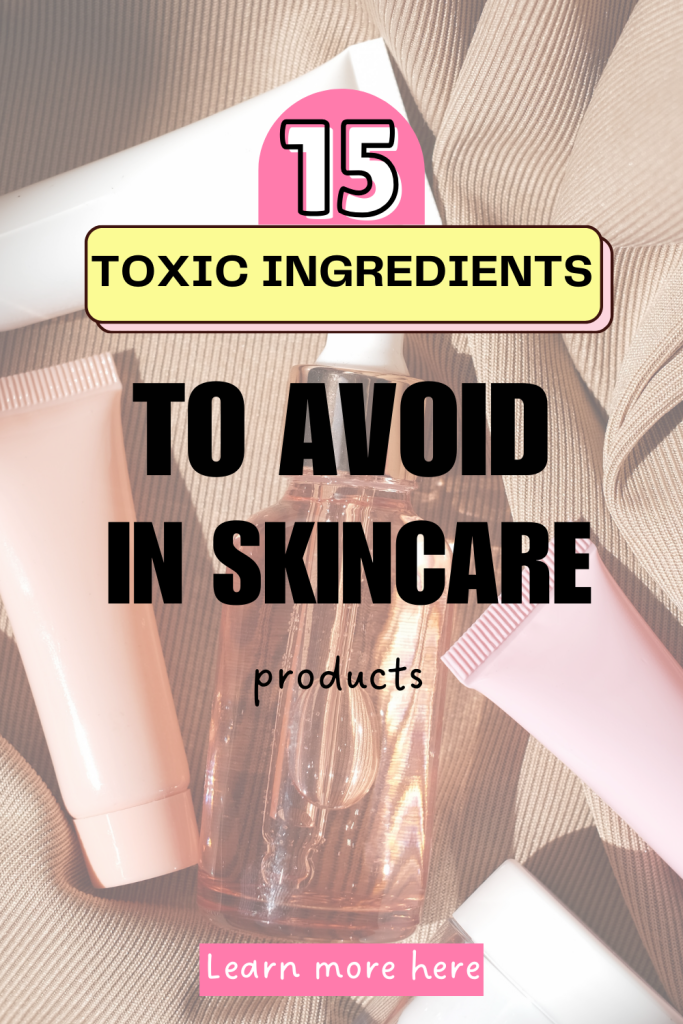
The List: 15 Toxic Ingredients to Avoid in Skincare
These are the usual suspects to avoid as well as what to use instead!
1. Parabens (methylparaben, propylparaben, etc.)
Parabens are used as preservatives and they mess with your hormones. These preservatives have been studied extensively and they’re linked to breast cancer and reproductive issues.
Parabens are also super common in many products, too, unfortunately.
Swap with: Products preserved with plant based preservatives such as sodium benzoate or radish root ferment.
2. Phthalates
Often hidden in “fragrance,” phthalates help products cling to your skin but like parabens these also disrupt your endocrine (hormone) system.
Swap with: Fragrance-free or essential oil-based scents that are clearly listed out on the label.
3. Fragrance/Parfum (Undisclosed)
This catch all term includes thousands of different ingredients that could be in the product but don’t have to be listed.
Listing something as just “fragrance” can hide hundreds of toxic chemicals including allergens, hormone disruptors, carcinogens, and skin irritants.
Brand transparency is SO important when it comes to fragrance specifically because the only way to really know what’s in “fragrance” is for the brand to list it out on their label.
If they don’t list it, then it makes you wonder what are they hiding or do they not even know what they are using?
Swap with: Fragrance free or use brands that use transparent labeling and list out the individual essential oils or botanical extracts that make up the fragrance.
4. PFAS Chemicals – (Per- and Polyfluoroalkyl Substances)
These are nicknamed “forever chemicals” because they literally don’t break down. They linger in your body and in the environment and are used in many different products.
PFAS are used to make products water- and stain-resistant.
They’ve been linked to cancer, hormone disruption, and immune system issues and yes, they show up in some foundations and moisturizers.
Avoid products with “perfluor” or “polyfluor” as part of the ingredient.
5. Formaldehyde & Formaldehyde-Releasing Preservatives
Another preservative, used to prevent bacterial growth but they’re classified as carcinogens. Nope.
Watch for: DMDM hydantoin, imidazolidinyl urea, or quaternium-15.
Swap with: Brands that do not use these and label their formulas clearly.
6. Polyethylene Glycols (PEGs)
Used to make products feel silky but they’re often contaminated with ethylene oxide, a known carcinogen.
Swap with: Plant-based emollients like shea butter, jojoba oil, or aloe vera.
7. Oxybenzone
A chemical sunscreen agent that’s been linked to hormone disruption and coral reef damage.
Swap with: Zinc oxide or titanium dioxide for broad-spectrum, reef-safe sun protection.
8. Triclosan
An antibacterial ingredient that may contribute to antibiotic resistance and endocrine disruption. Are you noticing a theme that a lot of these mess with your hormones?
Swap with: Tea tree oil or witch hazel in products that target breakouts or bacteria.
9. Talc
The main concern with Talc is the risk of being contaminated with asbestos being that talc and asbestos are naturally occurring minerals that may be found near each other in the Earth.
Use talc free where you can.
10. Ethanolamines (DEA, MEA, TEA)
Used as emulsifiers or foaming agents, these can react with other ingredients to form nitrosamines (potential carcinogens).
Swap with: Look for simpler formulations that skip these entirely.
11. Ethoxylated Ingredients
These ingredients are made using ethylene oxide, a known carcinogen and may be contaminated with 1,4-dioxane.
Common culprits include ingredients like ceteareth-20, PEG-100 stearate, and polysorbates.
Swap with: Look for products that use non-ethoxylated emulsifiers or natural alternatives like shea butter or squalane.
12. Mineral Oil & Petroleum-Based Ingredients
Derived from crude oil. These can also be contaminated with Polyaromatic Hydrocarbons which are linked to cancer. They sit on the skin and can clog pores, while offering really zero benefit.
Swap with: Plant oils like rosehip, argan, or marula oil.
13. Aluminum Compounds
Common in antiperspirants and deodorants, these block sweat glands and have been linked to potential health concerns (though studies are ongoing).
Swap with: Aluminum-free deodorants with ingredients like arrowroot powder, magnesium, and zinc ricinoleate.
14. Synthetic Dyes (FD&C, D&C)
Made from coal tar or petroleum, these can contain heavy metal residues of carcinogenic or endocrine disrupting byproducts of petroleum.
Swap with: Natural colorants like beetroot powder or fruit extracts.
15. Bismuth Oxychloride
Used for that “shimmery glow” in some powders and makeup but it’s made with heavy metals and known to clog pores and cause itching, breakouts, or even scratch your skin because the particles are sharp. Ouch!
Swap with: Clean, mica-based mineral makeup or talc-free powders without added shimmer.
You Deserve Better
The bottom line is that you do not have to settle when there are better, safer options for skincare and makeup out there. You also don’t need a chemical engineering degree to find safer products. This list is a great cheat sheet of the ingredients to avoid in skincare and is a perfect starting point.
If you are feeling like your brain is buzzing with all of this information, remember that the main things to look for on the label is if the company is using undisclosed fragrance and what types of preservatives they are using.
If you see just the word “fragrance” or “parfum” listed on something it’s an immediate red flag.
Look to see what actually makes up that fragrance!
You don’t have to be perfect. You just have to be informed. Swapping out even one toxic ingredient at a time is a radical act of self-care. It’s you saying: “I deserve better than cheap fillers and questionable chemicals.”